A family-run windows and doors company needed more than a brochure. I built their customer-facing iOS and Android app so homeowners can explore the range, visualise products on their own home, and send a detailed enquiry — entirely self-service.
Bradley Scott Windows is a family-run windows and doors company. I designed and built their customer-facing mobile app for iOS and Android, with the goal of letting homeowners explore the product range, visualise windows and doors on their own home, and send a detailed enquiry without ever picking up the phone. The app needed to work for someone browsing on the sofa — fast, visual, and self-service — while feeding well-qualified leads back to the company. It had to run on both phone and tablet and feel native throughout.
Before the app, a prospective customer had little to go on beyond a website and a brochure, and turning interest into a quote meant a phone call or an email that rarely contained enough detail. Composite doors are highly configurable — range, style, colours inside and out, frame, glass, handing, hardware — and there was no easy way for a customer to specify what they actually wanted, so enquiries arrived vague and the sales team spent time chasing the basics. Homeowners also couldn't picture how a new door or window would look on their actual house, which made them hesitant to commit. The result was a slow, manual back-and-forth that lost momentum between first interest and a real conversation.
At the heart of the app is a guided, step-by-step composite door designer. A homeowner can build their exact door — range, style, colours inside and out, frame, glass, handing and hardware — choosing from the full range Bradley Scott actually offer, with every option and finish available at their fingertips. Each choice updates as they go, so by the end they've designed precisely the door they want rather than trying to describe it.
An AI home visualiser lets a customer take a photo of their own house and see their chosen door or window — in their colours and styles — rendered onto it, so they can picture the finished result before they commit. Around that sits everything else a homeowner needs to make a decision: a full product catalogue with detail on styles, glass, colours, hardware and brochures, a sale section, a gallery of real installs, downloadable brochures, and order tracking for existing customers.
When a customer is ready, they send an enquiry — straight from a product page or a finished door design — and their exact choices and photos arrive with the sales team as a detailed, ready-to-quote spec. The app stays fast and browsable even with no signal, and there's no login or sign-up to get in the way — nothing stands between a homeowner and getting started.

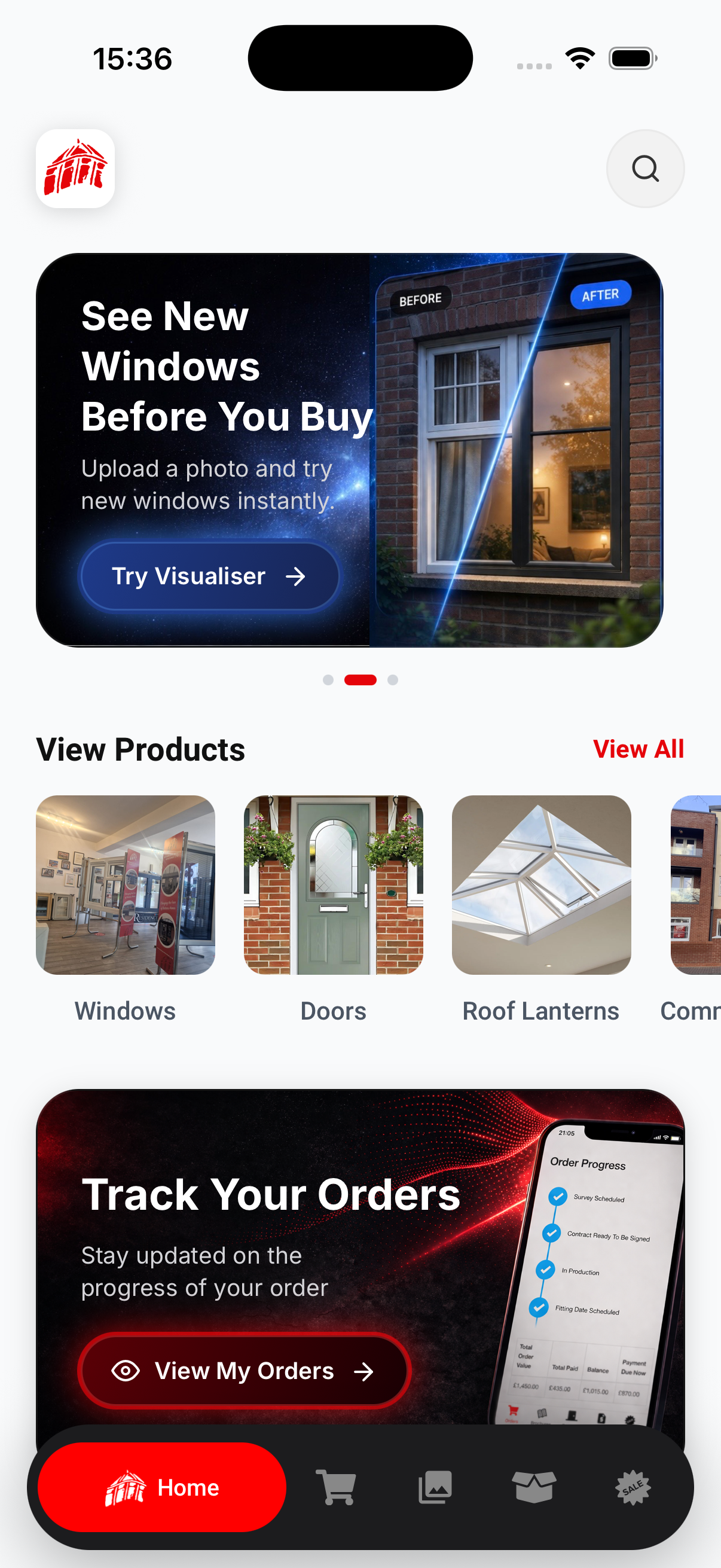
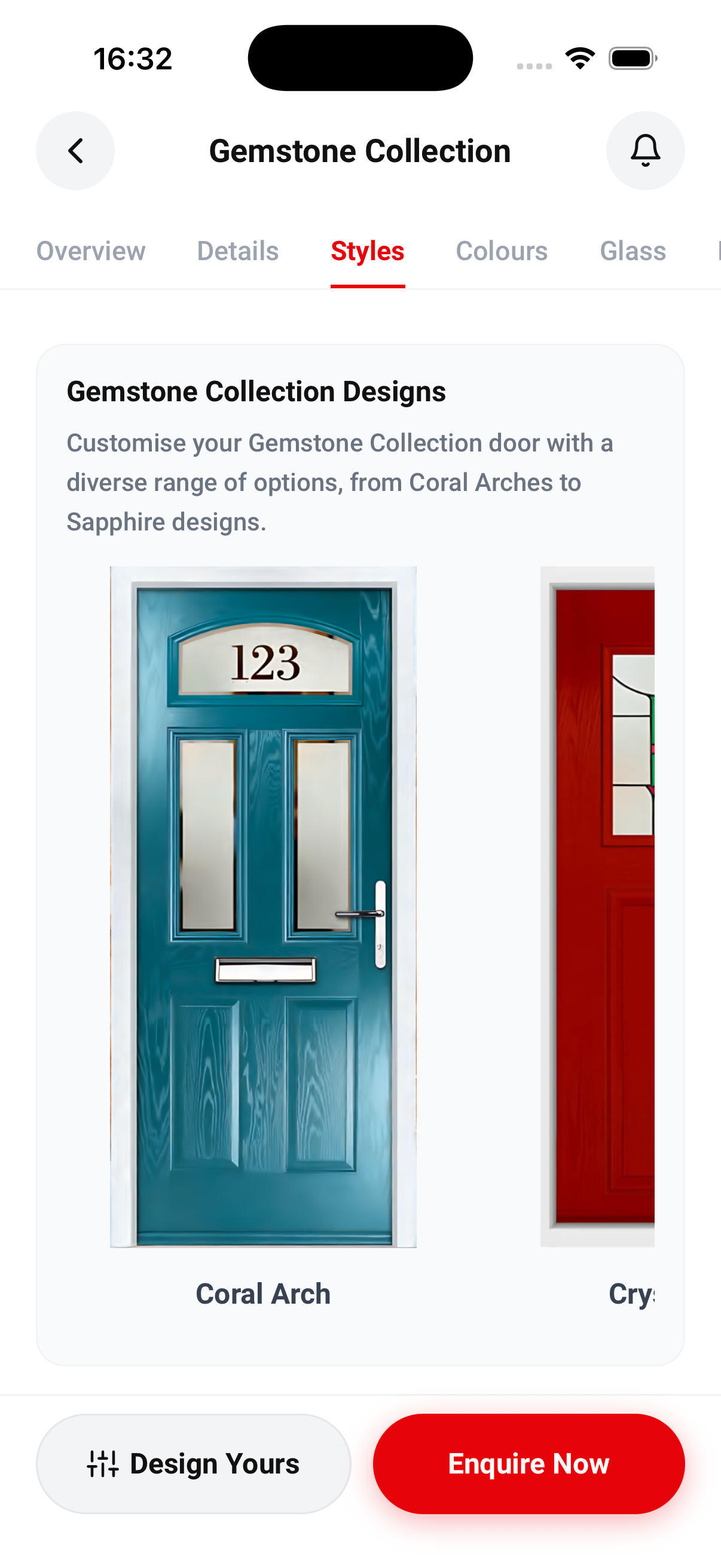
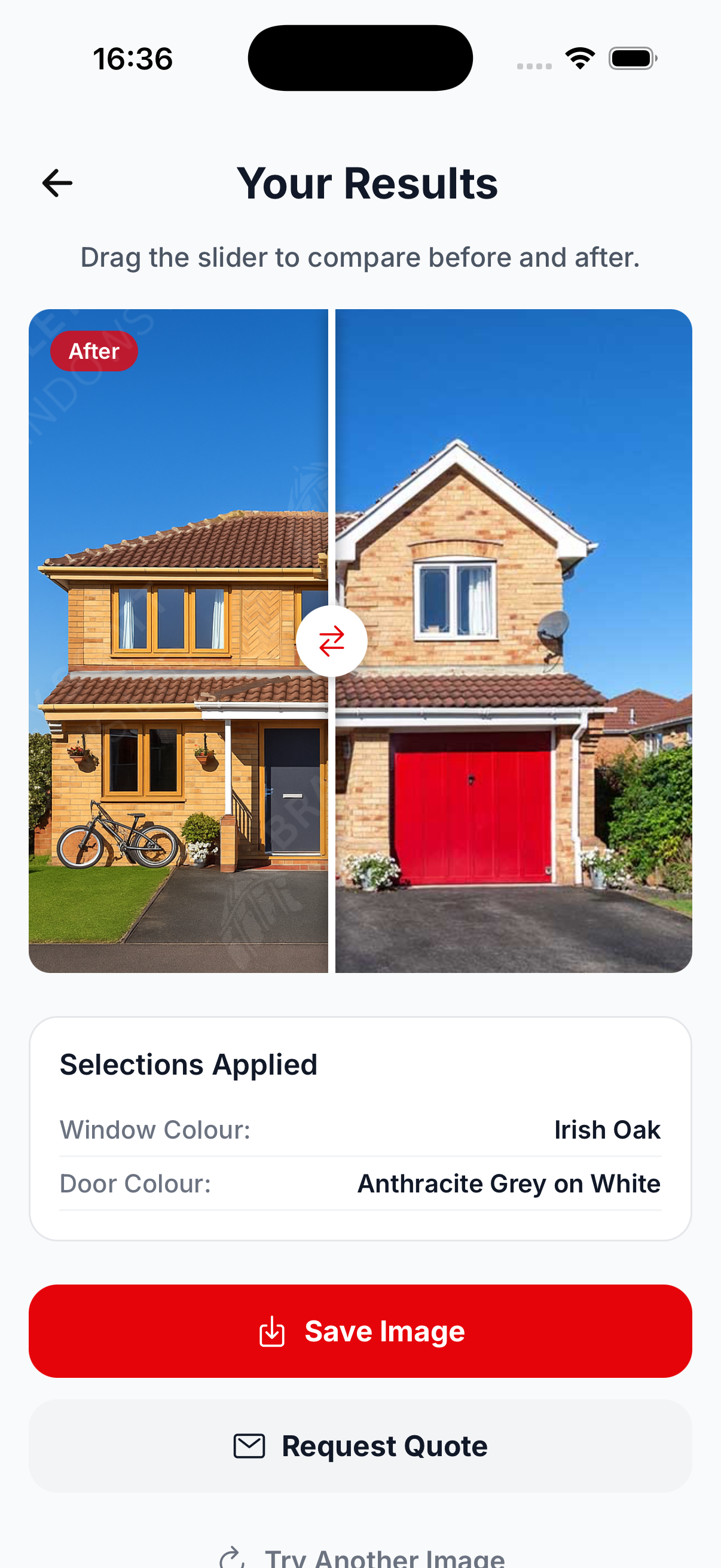
Since launch, enquiries should arrive far better qualified — a door enquiry now carries the exact range, colours, glass and hardware the customer chose, plus photos, instead of "I'd like a new front door." The visualiser gives people the confidence to commit by showing the product on their own home, which tends to lift conversion and reduce time-wasting on the sales side. Because everything is self-service and works even with no signal, customers can explore at their own pace and the company captures interest it would previously have lost — with the designer loading instantly rather than leaving anyone waiting around.
This was a genuinely customer-facing product — a polished, easy-to-use app that puts the whole range and a real design experience in a homeowner's pocket. It turns idle browsing into detailed, ready-to-action enquiries, and gives a family business a sales tool that punches well above its size.
The marketing site that brings 25 years of craft online.